In-Flight Emergency Handling by Air Hostesses
December 2025
Book Your Free Demo Class
How Air Hostesses Handle In-Flight Emergencies: Duties, Training & Safety Protocols
Air hostesses are often seen as hospitality professionals, but their primary responsibility is passenger safety. During in-flight emergencies, cabin crew act as first responders trained to handle life-threatening situations at 35,000 feet. From medical incidents to fire hazards and emergency landings, air hostesses follow strict international safety protocols to protect passengers and crew.
This guide explains how air hostesses manage in-flight emergencies, the training they undergo, and the safety procedures airlines follow in 2025.
Become a Trained Cabin Crew Professional
Why In-Flight Emergency Management Is a Core Cabin Crew Duty
Commercial aircraft operate under international aviation laws governed by organizations such as ICAO, DGCA, EASA, and FAA. Cabin crew are legally designated safety officers responsible for enforcing emergency procedures during abnormal situations.
Unlike ground emergencies, in-flight emergencies occur in a confined environment with limited medical resources, making cabin crew training critical for passenger survival.
Types of In-Flight Emergencies Handled by Air Hostesses
Medical Emergencies
Medical emergencies are the most common in-flight incidents. These include fainting, breathing difficulties, cardiac issues, allergic reactions, and diabetic emergencies.
- Assessing passenger condition
- Providing first aid and CPR
- Using onboard medical kits
- Coordinating with doctors onboard
- Communicating with cockpit crew
Fire and Smoke Emergencies
Fire inside an aircraft is considered one of the most dangerous emergencies. Cabin crew are trained to identify smoke sources quickly and extinguish fires using onboard equipment.
- Use of fire extinguishers
- Smoke hood procedures
- Electrical fire handling
- Lavatory fire protocols
Turbulence and Decompression
During severe turbulence or cabin decompression, air hostesses secure the cabin and guide passengers through safety procedures.
- Oxygen mask deployment
- Passenger brace position instructions
- Cabin inspection after stabilization
Emergency Duties of Air Hostesses Step by Step
Airlines follow a structured emergency response framework. Every action is practiced repeatedly during training and simulator sessions.
- Immediate situation assessment
- Clear communication with cockpit crew
- Passenger instruction and reassurance
- Emergency equipment usage
- Cabin monitoring and damage control
- Preparation for emergency landing if required
Learn Airline Safety Protocols from Experts
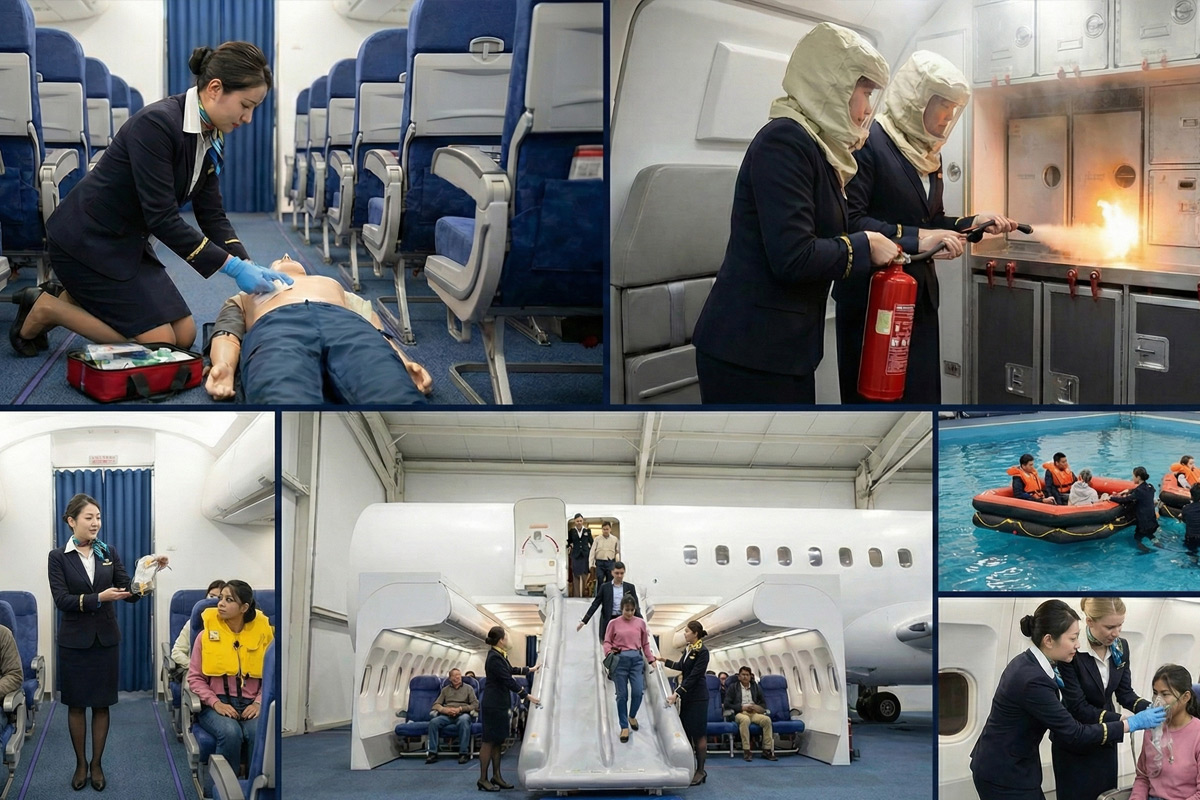
Emergency Training Air Hostesses Receive
Before flying, every air hostess undergoes rigorous safety training conducted by the airline and approved by aviation authorities.
Core Training Modules
- Aircraft evacuation drills
- Firefighting and smoke control
- CPR and first aid certification
- Water survival and ditching procedures
- Emergency communication techniques
Simulator and Mock Emergency Training
Cabin crew practice emergency scenarios in full-scale aircraft simulators to build muscle memory and decision-making speed.
Safety Equipment Used During Emergencies
- Fire extinguishers
- Oxygen bottles
- First aid and medical kits
- Automated External Defibrillator (AED)
- Life vests and slide rafts
- Emergency locator transmitters
How Air Hostesses Manage Passenger Panic
One of the most critical duties during emergencies is managing passenger behavior. Panic can worsen situations if not controlled.
- Clear verbal instructions
- Calm body language
- Authority-driven communication
- Individual passenger reassurance
Air hostesses are trained in psychology and crisis communication to maintain cabin order.
Emergency Landing and Evacuation Procedures
If an emergency landing is required, cabin crew prepare passengers through safety briefings and brace position demonstrations.
- Seatbelt checks
- Cabin secure procedures
- Exit operation after landing
- Passenger evacuation commands
- Post-evacuation headcount
Why Emergency Training Makes Cabin Crew a High-Responsibility Career
Air hostesses are trusted with passenger lives. Their ability to respond quickly and decisively during emergencies is what makes cabin crew one of the most respected aviation professions worldwide.
Explore Cabin Crew & Aviation Safety Courses
Frequently Asked Questions (FAQs)
1. Are air hostesses trained to handle real emergencies or only simulations?
Air hostesses are trained using real-life simulations that closely replicate actual emergency situations such as cabin fires, emergency landings, smoke-filled cabins, and water ditching. This ensures they can respond effectively during real emergencies.
2. What type of medical emergencies can air hostesses handle onboard?
Air hostesses are trained to manage fainting, breathing difficulties, heart-related issues, allergic reactions, burns, bleeding injuries, and childbirth emergencies until professional medical help is available.
3. Who takes control during an in-flight emergency – pilots or cabin crew?
Pilots handle aircraft operations, while cabin crew take complete control of the passenger cabin. Air hostesses are authorized to give commands, manage evacuations, and ensure passenger safety independently when required.
4. Can air hostesses initiate an evacuation without pilot instructions?
Yes. If there is immediate danger such as fire, smoke, or water entry, air hostesses are trained and legally permitted to initiate evacuation procedures without waiting for pilot instructions.
5. How often do air hostesses receive emergency training?
Cabin crew undergo mandatory emergency training every year, along with recurrent safety checks, drills, and certifications required by aviation authorities like DGCA, ICAO, and FAA.
6. Are air hostesses trained for water landings and sea survival?
Yes. Water survival training includes life raft deployment, flotation device usage, passenger coordination in water, and survival techniques until rescue teams arrive.
7. How do air hostesses control passenger panic during emergencies?
Air hostesses are trained in crowd psychology, command voice techniques, and crisis communication. Clear instructions, confident body language, and calm authority help control panic.
8. What happens after an emergency landing?
After landing, air hostesses assist in evacuation, conduct passenger headcounts, provide first aid, coordinate with rescue teams, and ensure no one is left inside the aircraft.
9. Is emergency training different for international airlines?
International airlines often provide advanced emergency training with stricter global compliance standards, additional simulator hours, and multi-aircraft emergency handling exposure.
10. Does emergency training impact air hostess salary or promotion?
Yes. Strong emergency performance records, leadership during incidents, and safety excellence play a role in promotions to senior cabin crew, purser, and trainer positions.
Tags: Air Hostess Safety Duties | Cabin Crew Emergency Training | In-Flight Emergency Procedures | Aviation Safety Protocols | Cabin Crew Responsibilities