Cabin Crew Interview Checklist
December 2025
Book Your Free Demo Class
Cabin Crew Interview Checklist: Mandatory Papers Every Candidate Must Carry (2025)
Cabin crew interviews are among the most structured recruitment processes in the aviation industry. Unlike regular corporate interviews, airline interviews are governed by strict safety regulations and international aviation standards. Even confident and well-groomed candidates are rejected every year due to missing documents or improper preparation.
With airlines like IndiGo, Air India, Vistara, Akasa Air, Emirates, Qatar Airways, and Etihad conducting frequent recruitment drives, aspirants must attend interviews fully prepared with the correct documents, professional grooming, and interview awareness.
This guide explains exactly what to carry, why each document matters, common interview mistakes, and how to improve your selection chances in 2025.
Join Cabin Crew Interview Preparation Program
Why Cabin Crew Interviews Are Different from Regular Job Interviews
Cabin crew are certified safety professionals responsible for passenger lives at high altitudes. Airlines operate under aviation authorities such as DGCA, ICAO, EASA, and FAA, making compliance mandatory at every recruitment stage.
Every document requested during a cabin crew interview serves a legal, operational, or safety purpose. Even a single missing document can result in instant disqualification.
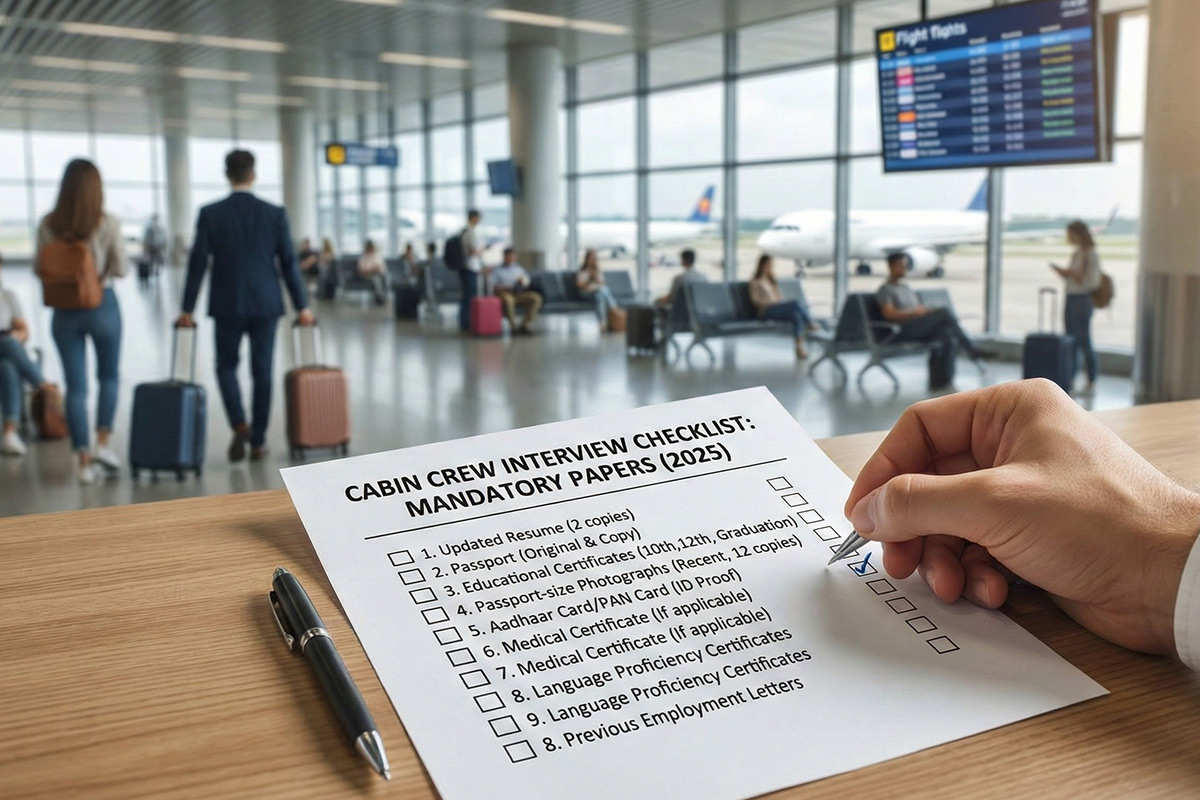
Complete Cabin Crew Interview Checklist (2025)
Candidates must carry originals along with multiple photocopies, neatly organized in a professional folder. Preparedness reflects discipline and airline readiness.
Mandatory Documents
- Valid passport with minimum 6 months validity
- Updated cabin crew resume in aviation format
- 10th and 12th original certificates
- Government ID proof (Aadhaar, PAN, or Voter ID)
- 10–15 passport-size photographs
Recommended Supporting Documents
- Aviation or cabin crew training certificates
- Medical fitness certificate (if available)
- Vaccination records (if requested)
- Language proficiency certificates
- Experience letter (for experienced crew)
Passport Rules for Cabin Crew Interviews
Passport-related issues are one of the most common reasons for rejection during cabin crew interviews.
- Original passport required
- Minimum 6 months validity
- At least 2 blank pages
- No damage or missing pages
International airlines strictly reject candidates without a passport. Domestic airlines may allow conditional entry in rare cases.
Cabin Crew Resume Checklist (Aviation Format)
Your resume is a screening tool, not a formality. It must be clean, professional, and airline-ready.
- Full name as per passport
- Date of birth
- Height, weight, and BMI
- Contact information
- Educational background
- Languages known
- Aviation training details (if any)
Get Airline-Standard Resume Guidance
Grooming and Appearance Evaluation
Airline recruiters assess grooming, posture, smile, and presentation within the first few seconds. Poor grooming often leads to rejection before interviews begin.
Female Grooming Standards
- Neatly tied hair (bun or French twist)
- Natural makeup with professional finish
- Knee-length formal dress or skirt suit
- Closed-toe heels (2–3 inches)
- No visible tattoos
Male Grooming Standards
- Clean-shaven or neatly trimmed beard
- Formal shirt tucked into trousers
- Black formal shoes with matching belt
- Well-groomed hair
Communication and Behavior Assessment
Airlines do not expect perfect English or accents. Recruiters evaluate clarity, calmness, confidence, listening ability, and customer-handling mindset.
- Clear speech
- Positive body language
- Eye contact
- Polite tone
- Ability to stay calm under pressure
Cabin Crew Interview Rounds Explained
- Document verification
- Grooming and appearance check
- Height and arm-reach test
- Group discussion
- Personal interview
- Medical examination
- Background verification
Common Cabin Crew Interview Mistakes
- Missing documents
- Incorrect dress code
- Poor posture or body language
- Overconfidence or nervous behavior
- Weak answers to basic questions
- Arriving late
Why Professional Cabin Crew Training Improves Selection Chances
Training is not mandatory but significantly improves confidence, grooming, and interview performance. Professionally trained candidates understand airline expectations better.
- Mock interviews and group discussions
- Airline grooming standards
- Confidence and body language training
- Aviation resume preparation
Enroll in Cabin Crew Training Program
Final Interview Day Checklist
- Passport and photocopies
- Resume copies
- Certificates
- Photographs
- Formal attire
- Professional mindset
Frequently Asked Questions – Cabin Crew Interview
Frequently Asked Questions About Cabin Crew Interviews (2025)
1. What documents are mandatory for cabin crew interviews?
Candidates must carry a valid passport, updated cabin crew resume, 10th & 12th certificates, government ID proof, and passport-size photographs. Missing any mandatory document can lead to immediate rejection.
2. Can I attend a cabin crew interview without a passport?
Most airlines require a valid passport at the interview stage. Some domestic airlines may allow conditional entry, but international airlines strictly reject candidates without a passport.
3. What is the minimum height requirement for cabin crew?
Height requirements vary by airline, but most require female candidates to be at least 155 cm and male candidates 170 cm, along with an arm-reach test on tiptoes.
4. Is professional cabin crew training mandatory before interviews?
Training is not mandatory, but professionally trained candidates have higher success rates because they understand airline grooming standards, interview etiquette, and safety expectations.
5. What should I wear for a cabin crew interview?
Candidates must wear formal attire. Females should wear a knee-length dress or skirt suit with heels, while males should wear a formal shirt with trousers and polished shoes.
6. Do tattoos affect cabin crew interview selection?
Yes. Airlines have strict tattoo policies. Tattoos visible while wearing cabin crew uniform (face, neck, arms, ankles) usually lead to rejection.
7. How many interview rounds are there in cabin crew recruitment?
Cabin crew interviews usually include document verification, grooming assessment, group discussion, personal interview, height reach test, and medical screening.
8. What communication skills do airlines look for?
Airlines look for clear English communication, calm behavior, confidence, customer-handling ability, and positive body language rather than accent or fluency alone.
9. How can freshers increase their chances of selection?
Freshers should focus on grooming, confidence, interview preparation, basic aviation knowledge, and attending professional cabin crew training programs.
10. What are the most common reasons for cabin crew interview rejection?
Common reasons include poor grooming, missing documents, lack of confidence, weak communication skills, incorrect dress code, and failing height or medical requirements.
Tags: Cabin Crew Interview | Air Hostess Interview | Cabin Crew Documents | Aviation Interview Tips | Cabin Crew Preparation