Best Cabin Crew Course in India
19-01-2026
Book Your Free Demo Class
Best Cabin Crew Course in India: Training, Eligibility & Career Path
A career as a cabin crew member continues to attract thousands of aspirants across India every year. The opportunity to work in a professional aviation environment, interact with passengers from diverse cultures, and represent an airline on a global platform makes this role one of the most aspirational careers after the 12th standard. As airline recruitment standards become stricter and more structured, aspirants increasingly search for the best cabin crew course in India to improve their preparation, confidence, and long-term career prospects.
Cabin crew training today is far more comprehensive than what many people assume. Airlines do not select candidates based only on appearance or communication. Instead, they evaluate safety awareness, emotional stability, teamwork, discipline, and the ability to perform under pressure. A structured cabin crew course helps aspirants understand these expectations and prepares them for the realities of aviation life rather than just the glamour associated with flying.
Explore All Aviation Training Programs
What Is a Cabin Crew Course?
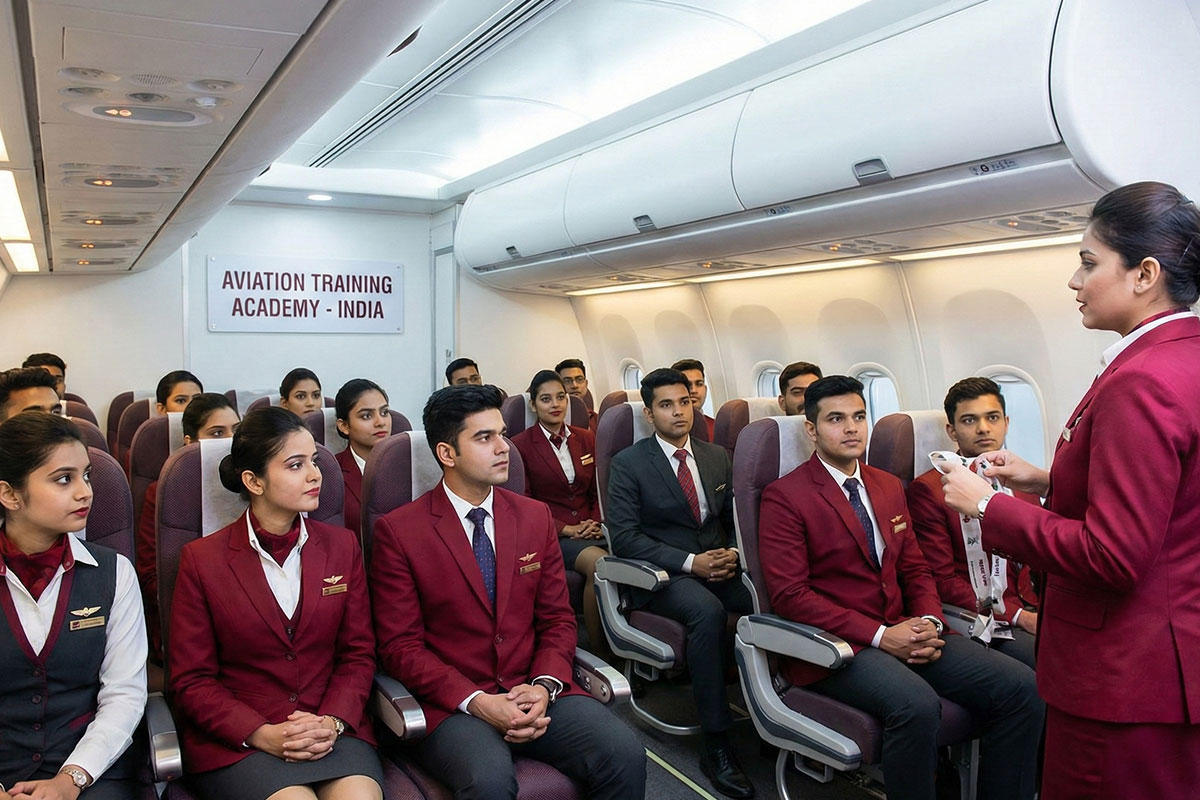
A cabin crew course is a professional aviation training program designed to prepare candidates for airline cabin crew roles, commonly referred to as air hostess or flight attendant positions. These professionals are responsible for passenger safety, emergency response, onboard service delivery, and maintaining airline brand standards throughout the flight.
The best cabin crew course in India goes beyond basic personality development. It focuses on aviation awareness, safety procedures, customer service protocols, communication discipline, and airline interview readiness. Such programs align closely with airline recruitment standards rather than offering generic or promotional training.
Why Cabin Crew Aspirants Benefit from Early Training
Although airlines conduct their own training after selection, pre-airline cabin crew training plays a crucial role in improving an aspirant’s interview performance. Airline recruitment processes are designed to assess attitude, awareness, emotional control, teamwork, and decision-making skills rather than memorized answers.
Early cabin crew training helps aspirants:
- Understand airline interview formats and assessment stages
- Build confidence for group discussions and role-play exercises
- Learn aviation terminology and cabin responsibilities
- Develop professional grooming, posture, and body language
- Respond effectively to situational and behavioral interview questions
This is why many aspirants choose a structured air hostess course in India or cabin crew training program before attending airline recruitment drives.
Book Free Cabin Crew Career Counselling
How Cabin Crew Training Builds Airline-Ready Skills
A high-quality cabin crew training program focuses on multiple skill areas that collectively prepare candidates for real airline environments. Each module is designed to mirror airline expectations rather than classroom theory.
Aviation Awareness & Cabin Crew Responsibilities
This module introduces candidates to the aviation industry, airline operations, aircraft cabin layout, crew hierarchy, and coordination between cabin crew, pilots, and ground staff. Understanding how airlines function helps candidates demonstrate seriousness and awareness during interviews.
Safety and Emergency Awareness
Safety is the primary responsibility of cabin crew. Training emphasizes emergency procedures, evacuation concepts, fire and smoke awareness, decompression scenarios, and onboard medical response. Airlines value candidates who display calm, rule-based thinking even under pressure.
In-Flight Service Standards
Service excellence is an important part of cabin crew roles. Training focuses on professional service behavior, cultural sensitivity, passenger psychology, and service consistency. Candidates learn how to manage diverse passenger needs while maintaining airline service protocols.
Communication Skills & Professional Interaction
Clear communication is essential for safety announcements, passenger assistance, and teamwork. Cabin crew training focuses on spoken English clarity, listening skills, assertive communication, conflict handling, and public speaking confidence.
Grooming & Airline Image Standards
Airlines maintain strict grooming and appearance standards. Training includes professional grooming, posture, facial expressions, uniform etiquette, and personal presentation. Grooming training helps candidates meet airline expectations while building self-confidence and discipline.
Interview Preparation & Assessment Readiness
The best cabin crew course in India includes structured interview preparation. This involves mock airline interviews, group discussion practice, resume guidance, and situational question handling. These sessions help candidates reduce interview anxiety and perform confidently.
Cabin Crew Interview Checklist – Mandatory Preparation
Eligibility to Join a Cabin Crew Course in India
Cabin crew training programs usually follow eligibility standards aligned with airline recruitment requirements. While criteria may vary slightly between airlines, common eligibility includes:
- 10+2 qualification from a recognized board (any stream)
- Age within airline-specified limits for fresh candidates
- Minimum height and arm-reach requirements
- Proficiency in English communication
- Medical fitness suitable for aviation roles
No prior aviation or hospitality background is required, making cabin crew training accessible to students from diverse educational paths.
Cabin Crew Course Duration & Learning Structure
The duration of cabin crew courses varies based on the depth of training and institute structure. Programs may range from short-term preparatory courses to comprehensive professional training modules. However, effectiveness depends on training quality rather than duration.
Well-structured programs balance classroom learning with practical activities such as role plays, announcement practice, grooming sessions, and mock interviews.
Career Opportunities After Cabin Crew Training
Completing a cabin crew course prepares candidates to apply for airline recruitment drives conducted by domestic and international airlines. While training does not guarantee selection, it significantly improves preparedness.
- Domestic airline cabin crew roles
- International airline cabin crew positions
- Charter and private aviation crew roles
- Corporate and VIP aviation services
- In-flight supervisory and training roles (with experience)
A professional cabin crew training course opens doors to global aviation opportunities and long-term career growth.
Cabin Crew Salary & Career Growth
Cabin crew careers offer structured progression rather than static roles. Entry-level salaries vary by airline type and flight routes, while experienced crew members benefit from allowances, international layovers, and leadership opportunities.
With experience, cabin crew can move into senior crew positions, trainers, base supervisors, or airline ground operations roles.
How to Choose the Best Cabin Crew Course in India
Choosing the right training program is critical. Aspirants should evaluate courses based on substance rather than advertisements.
- Curriculum aligned with airline recruitment standards
- Trainers with aviation or airline experience
- Strong focus on interview preparation
- Practical learning methods
- Transparent guidance without false job guarantees
Role of Self-Preparation Alongside Training
While training provides structure, self-preparation plays an equally important role. Aspirants should actively work on communication skills, physical fitness, confidence, and aviation awareness. Consistent practice enhances training outcomes significantly.
Frequently Asked Questions (FAQs)
1. What is the best cabin crew course in India?
The best cabin crew course aligns with airline recruitment standards and focuses on safety awareness, communication, grooming, and interview readiness.
2. Is cabin crew training mandatory before airline interviews?
Training is not mandatory, but it significantly improves interview performance and confidence.
3. Who can apply for a cabin crew course in India?
Candidates from any educational background who meet age, height, communication, and medical standards.
4. Does completing a cabin crew course guarantee airline selection?
No. Airlines conduct independent recruitment. Training improves readiness, not guarantees.
5. What skills are developed during cabin crew training?
Safety awareness, communication, grooming, teamwork, passenger handling, and interview preparedness.
6. Is appearance more important than skills?
No. Airlines prioritize attitude, emotional control, communication, and safety mindset.
7. Can students without aviation background apply?
Yes. Aviation background is not mandatory.
8. What career growth exists for cabin crew?
Senior crew, trainers, supervisors, and airline management roles.
9. Are international airline jobs possible?
Yes, subject to eligibility and experience.
10. How important is self-preparation?
Extremely important. Training plus self-discipline leads to success.
Tags: Best Cabin Crew Course in India | Air Hostess Training | Aviation Careers | Flight Attendant Course | Cabin Crew Eligibility